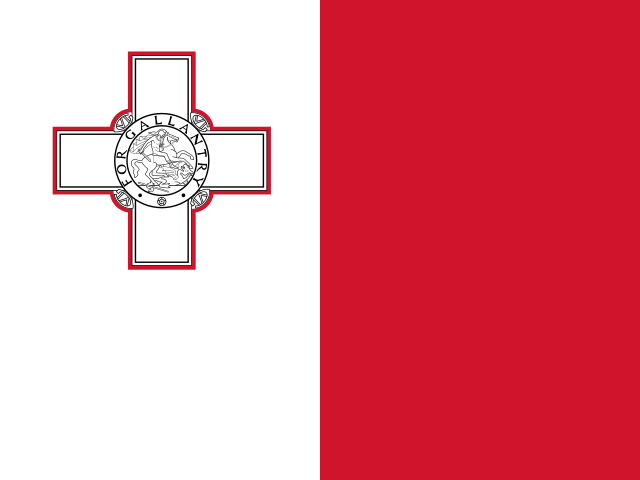
Some descriptions for this country are still Russian only: 89% translated. Numbers, prices and timelines are complete.
Malta: cities, climate & safety
updated 19.11.2026
Cities
Valletta
The capital and a UNESCO World Heritage site; the administrative and tourist centre. The EU's smallest capital by area and population (5,226, 2024).
Valletta: a coastal city, at risk of flooding from downpours and rising sea levels; summer heat. Crime is low.
Birkirkara
Malta's most populous locality (29,482, 2025); a central residential town.
Birkirkara: flash flooding in low-lying parts during heavy autumn rain. Crime is low.
Mosta
A central town known for the domed Rotunda church (25,379, 2024).
Mosta: summer heat, flash floods during intense rain. Crime is low.
Sliema
A coastal commercial and business centre with a promenade; popular with expats. St Julian's, the online gaming zone, is next door (22,224, 2024).
Sliema: a coastal town, flooding in storms and with rising sea levels; summer heat and a high density of tourists. Crime is low.
Qormi
A central residential and industrial city known for its bakeries (19,752, 2024).
Qormi: sits in a low-lying area — a risk of flash flooding. Crime is low.
Climate
- Type
- Mediterranean (Csa): hot dry summers, mild wet winters
Hot dry summers, mild wet winters; rainfall mostly in autumn and winter.
Safety
- Situation
- calm
A stable parliamentary democracy and a member of the EU and the eurozone. Questions about the rule of law and corruption have been raised in recent years.
Crime: Low violent crime. Detailed data on theft, car theft and fraud is not confirmed by sources.
Natural hazards
Malta is not in a high-seismicity zone; perceptible tremors from distant earthquakes (the Sicily area) are rare and destructive ones practically never occur.
A small island with minimal forest cover; isolated fires in dry vegetation are possible in summer.
Flash floods in valleys and towns during intense autumn rain; coastal flood risk is growing as sea levels rise.
No hurricanes. Occasional Mediterranean cyclones (medicanes) of moderate strength.
One of the most water-scarce countries: very limited fresh water and heavy dependence on desalination.
Hot Mediterranean summers; the region is warming faster than the global average and heatwaves are becoming more frequent.
No active volcanoes.
A theoretical risk from Mediterranean seismic activity, historically very rare.
The main factors are chronic water shortages, hot summers and flash floods. Seismicity is low and destructive natural disasters are practically non-existent. The rating is a composite figure.
Travel services: Malta
Ad · Aviasales, GetRentacar, AiraloCompare flight prices across airlines and travel agencies.
Local rental companies and private owners, no-deposit options.
Digital travel eSIM plans without roaming fees or physical SIM cards.