Honduras or Nicaragua
Two countries side by side across the same rows as the full comparison. A dash means the value is missing: fields are not filled with guesses. about the data
| Honduras | Nicaragua | |
|---|---|---|
| Salary in IT | — | — |
| Citizenship | 3 years | 4 years |
| Partner can work | yes | yes |
| Parents | — | doable |
| Pets | no trouble | no trouble |
| Pet limit | no limit | no limit |
| Quarantine | no | no |
| Residence permit fee | — | — |
| Rent, 2 bedrooms | $ 506 · estimate | $ 301 · estimate |
| Basket | $ 27,1 | $ 32,1 |
| Life expectancy | 73.04 | 75.1 |
| Homicides/100k | 23.92 | 5.45 |
| Natural hazards, 0–10 | 5.8 | 5.8 |
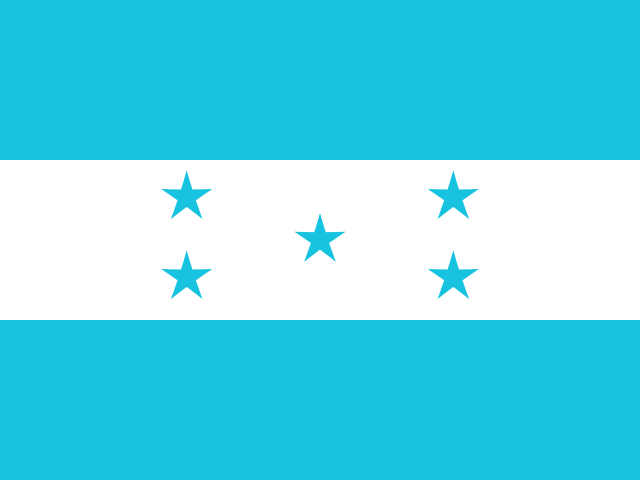
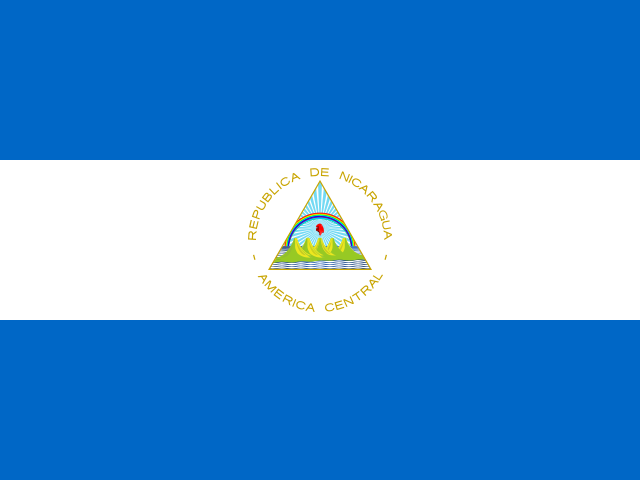
How the two sets of routes differ
Long-stay routes in this reference: Honduras — 25, Nicaragua — 25. Types present in both: work, study, family, investment and retirement. The set of types is identical — the difference is in how many routes there are and on what terms, not in the types themselves.
Fees, thresholds and deadlines
Honduras: fees range from 50 to 500 USD. Routes stating an income threshold: 3; the lowest is 1,500 USD a month. Nicaragua: fees range from 25 to 500 USD. Routes stating an income threshold: 2; the lowest is 1,000 USD a month. Routes with a published decision deadline: 24; the shortest is 30 days.
Beyond the first permit
Permanent status: Honduras after 5 years, Nicaragua after 3 years. Citizenship: Honduras after 3 years, Nicaragua after 4 years. Neither recognises a second citizenship.
Honduras in brief
The Ley de Migración y Extranjería (decree 208-2003, in force since 2004) divides foreigners into "no residentes" and "residentes": residence is available directly, with no intermediate temporary step, based on income - rentista (from US$2,500 a month) and pensionado (from US$1,500 a month) - or based on an investment of at least $50,000. A separate, annually renewable category - permiso especial de permanencia - covers contract work, study and economic dependants. Permanent-residence status (residente inmigrado) is reached after 5 years of residence; naturalisation under the general path takes 3 years of continuous residence (Constitution of the Republic, Article 24), 1 year for citizens of other Central American countries, and 2 years for Spaniards and Ibero-Americans by birth; naturalisation under most grounds requires renouncing prior citizenship, except where a bilateral dual-citizenship treaty is in force. Honduras belongs to the CA-4 bloc together with Guatemala, El Salvador and Nicaragua: the visa regime for third-country citizens is harmonised among these four countries (Secretaría de Relaciones Exteriores of Honduras), and in practice the 90-day tourist stay (extendable by 30 days) is not reset when moving between the bloc's countries without leaving the bloc - a regular cause of unintentional visa overstays in the region. Importing dogs and cats requires no quarantine or rabies antibody titre testing given current vaccination (according to the UK veterinary agency APHA - the Honduran veterinary service SENASA's own website does not publish substantive requirements). Population and business activity are concentrated in the Distrito Central (Tegucigalpa and Comayagüela) and in San Pedro Sula in the Sula Valley, while tourist flow goes to the Mesoamerican Reef off Roatan (the special ZOLITUR economic regime for Islas de la Bahía) and to the UNESCO World Heritage site of Copán. The level of violent crime is one of the highest in the world, but has fallen markedly: from a peak of 83.2 murders per 100,000 population in 2011 to 23.9 in 2024 (UNODC). The Caribbean coast and adjoining lowlands fall within the hurricane season (June-November), which has historically been accompanied by destructive floods in the Sula Valley and landslides on developed slopes in Tegucigalpa (Hurricane Mitch, 1998; Hurricanes Eta and Iota, 2020).
Nicaragua in brief
The Ley General de Migración y Extranjería (Ley No. 761, consolidated text as of 18.01.2024) divides foreigners into residents and non-residents; residents are divided into temporary (1–3 years) and permanent. Pensioners and rentiers with confirmed income from USD 1,000 and USD 1,250 a month respectively (Ley No. 694), investors, family members of residents, and nationals of other Central American countries obtain permanent residence directly, bypassing the temporary tier; for other temporary residents, the general route is more than three years of continuous lawful stay. Citizenship is available after four years of permanent residence with renunciation of prior nationality, or — for natives of Spain, Central American countries and spouses of Nicaraguan citizens — after two years without such renunciation. Nicaragua is part of the CA-4 bloc together with El Salvador, Guatemala and Honduras: the visa for third-country nationals is unified across the bloc (art. 108 of the law), and the 90-day stay count, per independent confirmation from the UK government, does not reset when crossing borders within the bloc — a regular cause of unintentional visa overstay in the region. Importing dogs and cats, per data from the UK veterinary agency APHA, requires neither quarantine nor a rabies antibody titre test given current vaccination (IPSA's own site does not publish substantive import requirements). The country lies in the Pacific volcanic belt: about 87% of seismic activity is recorded near the Pacific coast (including at San Juan del Sur — one of the three officially named concentration zones), with a further roughly 10% along the volcanic chain, which includes the active Masaya volcano and volcanoes near León and Granada (INETER/INIDE). The country's Caribbean coast falls within the hurricane season (June–November) with a significantly higher risk of a direct hit than the Pacific-side cities studied here; Hurricane Felix in 2007 and Hurricanes Eta and Iota in 2020 struck precisely the Caribbean coast. The cost of living in the country is among the lowest in Latin America (a nine-item grocery basket costs about USD 32 per livingcost.org), and income indicators are among the lowest in the region: per-capita health spending (USD 216.55 a year, World Bank, 2023) is one of the lowest figures in the sample collected across countries.
Other comparisons
Honduras or… Panama · Costa Rica · Peru · Ecuador · Trinidad and Tobago · El Salvador · Cuba · Guyana
Nicaragua or… Belize · Bolivia · Colombia · Greenland · Jamaica · Bahamas · Guatemala · Dominican Republic
More on each: Honduras · Nicaragua. Build your own comparison — up to four countries
This material is for reference and is not legal, tax or immigration advice. Visa rules, tax thresholds and prices change. Before deciding anything, check the official sources and consult a licensed professional in the relevant country.