The Gambia or Morocco
Two countries side by side across the same rows as the full comparison. A dash means the value is missing: fields are not filled with guesses. about the data
| The Gambia | Morocco | |
|---|---|---|
| Salary in IT | — | — |
| Citizenship | — | 5 years |
| Partner can work | — | — |
| Parents | — | — |
| Pets | difficult | no trouble |
| Pet limit | no limit | no limit |
| Quarantine | — | no |
| Residence permit fee | — | — |
| Rent, 2 bedrooms | $ 118 · estimate | $ 697 · estimate |
| Basket | $ 19,2 | $ 26,3 |
| Life expectancy | 66.06 | 75.49 |
| Homicides/100k | — | 1.67 |
| Natural hazards, 0–10 | 2.9 | 4.3 |
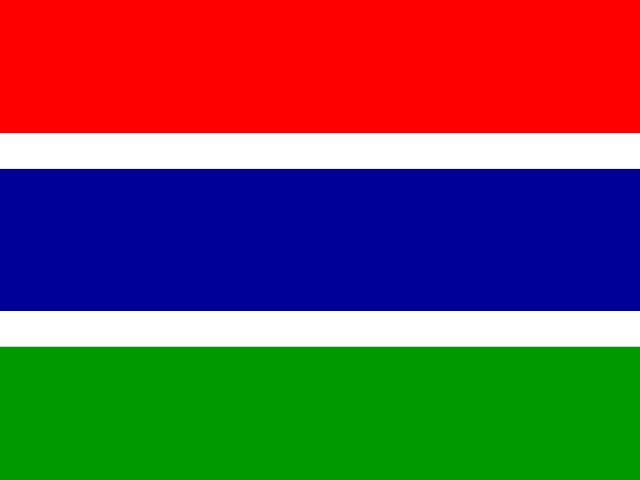
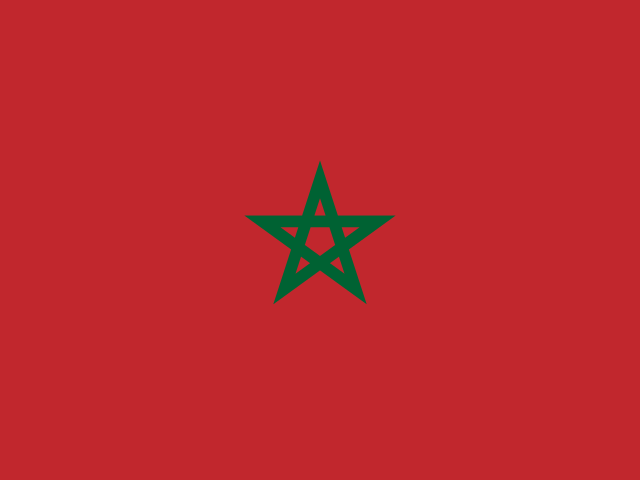
How the two sets of routes differ
Long-stay routes in this reference: The Gambia — 6, Morocco — 13. Types present in both: work. Morocco adds: study and family.
Fees, thresholds and deadlines
The Gambia: fees range from 100 to 7,700 GMD. Morocco: not a single route publishes its fee.
Beyond the first permit
Permanent status: Morocco after 4 years; the other country publishes no term. Citizenship: Morocco after 5 years; the other country publishes no term.
The Gambia in brief
The Gambia is very cheap and very poor at the same time. **A monthly transit pass at 6.55 dollars is the cheapest in this guide**, and a one-bedroom in Banjul rents for 80 euros with utilities at 26. And alongside that: health spending of 25.74 dollars per person per year — fifth from the bottom among 167 countries. Life expectancy is 66.06 years, basic water access reaches 87.1 percent of the population, PM2.5 stands at 38.27 micrograms per cubic metre (the twenty-fourth highest of 170), and road deaths run at 22.0 per 100,000. Unemployment is 6.52 percent, and 10.86 among young people. Overall natural hazard is 2.9 out of 10 on INFORM and almost entirely water-borne: flooding 4.6, drought 3.0, coastal hazards 2.5, tsunami 1.1, with earthquakes and cyclones practically absent. On the World Bank scale the governance figures are appreciably better than the regional norm: political stability −0.02, control of corruption −0.33, rule of law −0.39 and government effectiveness −0.54. The Immigration Department sets out the procedure in detail. A visa may be single journey, multiple journey (valid no longer than 12 months), transit, diplomatic (heads of missions only, and free) or short visit for 90 days; ECOWAS citizens need no visa. The service states twice that issuing a visa does not guarantee entry: the final decision rests with the officer at the port of arrival. There are two classes of residence permit: A — to live without gainful employment (students, retirees, short business visits) — and B, to live and work. The distinction by nationality runs through everything: an ECOWAS citizen obtains a permit after up to 90 days in the country, while a non-ECOWAS citizen must reside for up to 56 days after admission before a permit can be issued at all, and additionally receives an Alien Card. Fees run from 3,100 to 7,700 dalasi. Hiring is bounded by a QUOTA rather than a procedure: 80 percent of a workforce must be Gambians and 20 percent foreigners with skills unavailable in the country, and the Ministry of Trade administers it. Working without a residence and work permit is an offence. Family is arranged without a document of its own: the children and direct dependants of a permit holder are covered by that same permit, but on reaching adulthood must obtain one of their own. What is not in this data: there is no permanent residence in the department's catalogue, but a catalogue is not a law, and the Immigration Act itself is not published, so the number of years to permanent residence is left empty. The department publishes no processing standard for any of the seven steps of its own "processing cycle". The road to citizenship, by contrast, is published and long: seven years of residence from the date of marriage, or fifteen years by naturalisation. For cats there is no data at all — the British veterinary certificate for The Gambia covers only dogs. The city's population is not given: no official source separating Banjul from its area could be found.
Morocco in brief
Morocco is a kingdom in northwest Africa with coastlines on the Atlantic Ocean and the Mediterranean Sea; the point of the continent closest to Europe is near Tangier, on the Strait of Gibraltar. The five cities covered here span different profiles: Casablanca — the largest city and business centre, Rabat — the political capital, Marrakech and Agadir — an imperial UNESCO-listed city and a seaside resort respectively, Tangier — a port and industrial hub on the strait. Bringing in cats and dogs is straightforward: there is no quarantine on arrival, and for a permanent move a microchip and a current rabies vaccination without antibody titre testing are sufficient, except for three breeds classified as “dangerous” and banned from import. Homicides are rare (1.67 per 100,000, UNODC), but the World Bank's political stability, control of corruption and rule of law indices are below zero on the −2.5 to +2.5 scale, and youth unemployment exceeds 21%. The region around Marrakech is prone to earthquakes — a destructive earthquake struck Al Haouz there in September 2023. The official conditions for work visas, the timelines for residence permits and citizenship, and family reunification could not be confirmed against primary sources at the time this material was prepared.
Other comparisons
The Gambia or… Nigeria · Rwanda · Tunisia · Algeria · Tanzania · Kenya · South Africa · Angola
Morocco or… Gabon · Madagascar · Sierra Leone · Uganda · Zambia · Eswatini · Lesotho · Mozambique
More on each: The Gambia · Morocco. Build your own comparison — up to four countries
This material is for reference and is not legal, tax or immigration advice. Visa rules, tax thresholds and prices change. Before deciding anything, check the official sources and consult a licensed professional in the relevant country.