Bolivia or Venezuela
Two countries side by side across the same rows as the full comparison. A dash means the value is missing: fields are not filled with guesses. about the data
| Bolivia | Venezuela | |
|---|---|---|
| Salary in IT | — | — |
| Citizenship | 3 years | — |
| Partner can work | yes | — |
| Parents | straightforward | — |
| Pets | no trouble | no trouble |
| Pet limit | no limit | no limit |
| Quarantine | no | no |
| Residence permit fee | — | — |
| Rent, 2 bedrooms | $ 445 · estimate | $ 757 · estimate |
| Basket | $ 20,8 | $ 33,9 |
| Life expectancy | 68.74 | 72.67 |
| Homicides/100k | 3.65 | 13.81 |
| Natural hazards, 0–10 | 4.7 | 5.9 |
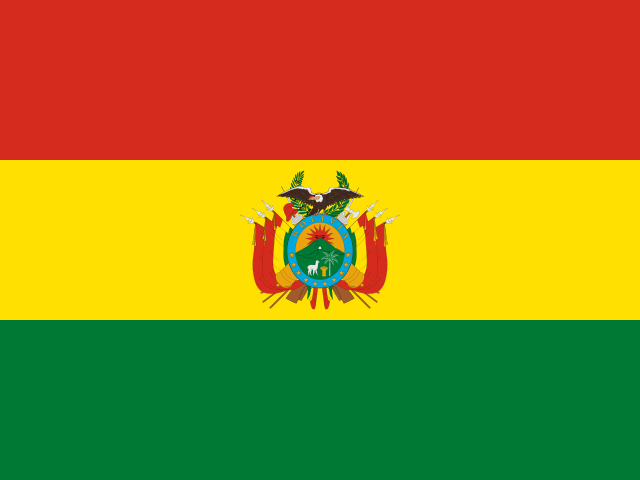
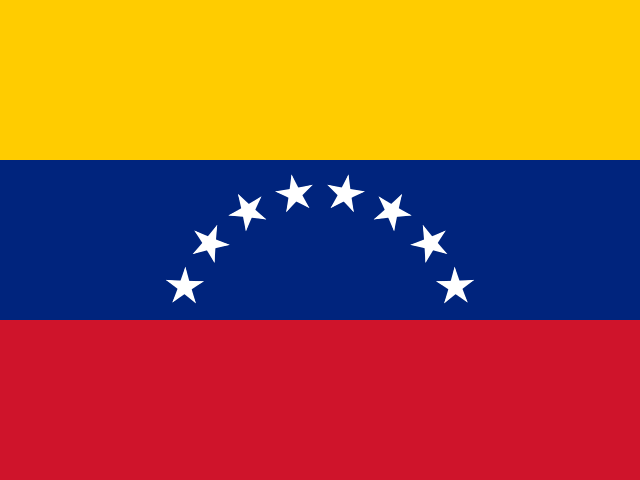
How the two sets of routes differ
Long-stay routes in this reference: Bolivia — 23, Venezuela — 15. Types present in both: work, study, family and investment. The set of types is identical — the difference is in how many routes there are and on what terms, not in the types themselves.
Fees, thresholds and deadlines
Bolivia: every route that publishes a fee charges nothing. Venezuela: the fee is 50 USD wherever it is published. Routes stating an income threshold: 1; the lowest is 1,200 USD a month.
Beyond the first permit
Permanent status: Bolivia after 3 years; the other country publishes no term. Citizenship: Bolivia after 3 years; the other country publishes no term.
Bolivia in brief
Bolivia stands out for its timelines: open-ended status is available after 3 years of residence, citizenship also after 3 years, dual citizenship is allowed, and the law sets no language requirement. The constraint is procedural: entry must be on a purpose-specific visa for 30 days and status is then arranged inside the country, and the law sets no calendar processing deadlines for family-based applications.
Venezuela in brief
Venezuela has the lowest rule-of-law score in this set and a high seismic risk. On the World Bank scale from −2.5 to +2.5, rule of law stands at −2.20, political stability at −1.74, control of corruption at −1.59 and government effectiveness at −1.47. Life expectancy is 72.67 years, health spending 185.99 dollars per person per year, basic access to water reaches 93.33 per cent of the population, and mean PM2.5 concentration is 19.2 micrograms per cubic metre. Homicides run at 13.81 per 100,000 and road deaths at 13.2 per 100,000. Overall natural risk is 5.9 out of 10 on INFORM, and it is varied: earthquakes at 8.1 are among the highest figures in this set, coastal risks 6.7, floods 5.7, cyclones 5.6, tsunami 5.4, while droughts sit at just 1.9. The immigration system is split between two authorities: the visa is issued by a consulate abroad, while status inside the country is administered by SAIME. Statuses divide into transients, carrying letter codes by ground of stay — work, private income, family, study, religion — and residents. The work category is arranged so that the work authorisation is issued by the labour ministry rather than the migration service. The private-income category names an income threshold: the equivalent of 1,200 US dollars a month. The family category is unusually broad: the status covers a spouse, minor children, parents and parents-in-law. What this data does not contain, and why: neither SAIME nor the foreign ministry publishes statutory processing times or fees — the ministry's visa page refers applicants to the specific consulate for the fee. The qualifying period for permanent status is set by the Aliens and Migration Act, whose text is on no accessible official platform, so the number of years is left empty even though permanent status itself exists. The population of Caracas is not given: the official statistics institute does not respond from the checking machine, and the capital district cannot be mixed with an agglomeration spanning two federal subjects.
Other comparisons
More on each: Bolivia · Venezuela. Build your own comparison — up to four countries
This material is for reference and is not legal, tax or immigration advice. Visa rules, tax thresholds and prices change. Before deciding anything, check the official sources and consult a licensed professional in the relevant country.