Burundi or Zambia
Two countries side by side across the same rows as the full comparison. A dash means the value is missing: fields are not filled with guesses. about the data
| Burundi | Zambia | |
|---|---|---|
| Salary in IT | — | — |
| Citizenship | — | 10 years |
| Partner can work | — | — |
| Parents | — | — |
| Pets | — | difficult |
| Pet limit | no limit | no limit |
| Quarantine | — | — |
| Residence permit fee | — | — |
| Rent, 2 bedrooms | $ 451 · estimate | $ 356 · estimate |
| Basket | $ 37,3 | $ 26,5 |
| Life expectancy | 63.82 | 66.53 |
| Homicides/100k | 5.65 | 5.2 |
| Natural hazards, 0–10 | 3 | 3.1 |
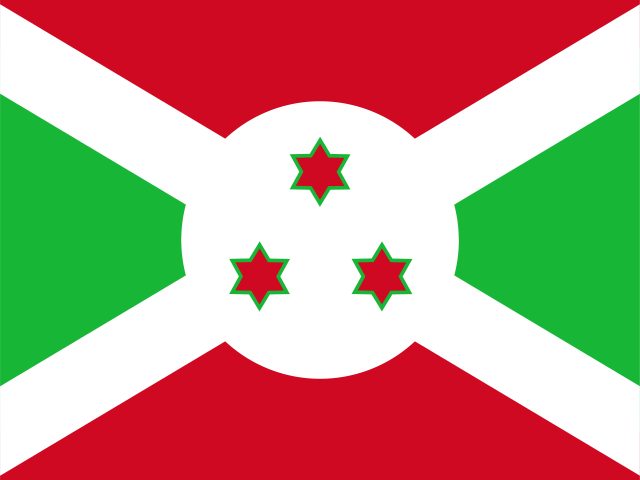
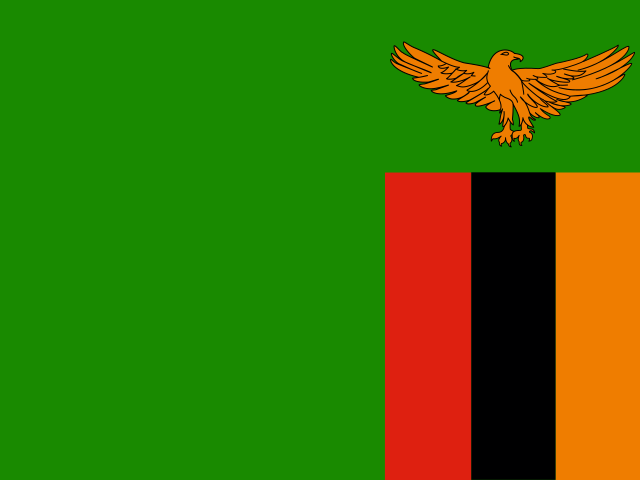
How the two sets of routes differ
Long-stay routes in this reference: Burundi — 17, Zambia — 19. Types present in both: work, study, family and investment. Zambia adds: repatriation and retirement.
Fees, thresholds and deadlines
Burundi: fees range from 25 to 1,200 USD. Routes with no fee: 7. Zambia: fees range from 3,000 to 24,000 ZMW. Routes with no fee: 1. Routes stating an income threshold: 1; the lowest is 250,000 USD a month.
Beyond the first permit
Permanent status: both after 10 years. Citizenship: Zambia after 10 years; the other country publishes no term.
Burundi in brief
Burundi is a country with weak institutions and expensive connectivity alongside very cheap transport. On the World Bank scale from −2.5 to +2.5, control of corruption stands at −1.46, political stability at −1.38, rule of law at −1.30 and government effectiveness at −1.01. Life expectancy is 63.82 years, health spending 28.14 dollars per person per year, basic access to water reaches 65.92 per cent of the population, and mean PM2.5 concentration is 35.69 micrograms per cubic metre. Road deaths run at 12.3 per 100,000 and homicides at 5.65 per 100,000 (2016 data). Overall natural risk is 3.0 out of 10 on INFORM: earthquakes 4.6, droughts 3.8, floods 2.6; the country is landlocked, so cyclone, tsunami and coastal risks are zero. The unemployment figures — 0.92 per cent overall and 1.68 per cent among young people — reflect the structure of a labour market that is almost entirely informal and agricultural, not the absence of a problem finding work. One distinctive feature of prices: a month of internet costs 65.28 dollars against utilities of 16.92 and a monthly transport pass of 25.37. The immigration framework is published by the authority in full and reads without intermediaries: the service catalogue of the Directorate-General of Migration sets out, for every visa, the required documents, the fee and the period of validity. The establishment visa is issued for two years and requires a deposit in a blocked account — 1,500 dollars for one person or 5,000 for a family. Permanent residence is granted on one of several grounds: ten years of uninterrupted residence with proven investments, substantial investment creating durable employment for nationals, or marriage to a Burundian citizen, where the marriage condition is asymmetric by gender. What this data does not contain: the authority publishes no statutory processing times for any service, and the rules for importing cats and dogs are described neither by a national source nor by the veterinary authorities of other countries.
Zambia in brief
Zambia is a landlocked country in southern Africa whose economy relies on the mining and export of Copperbelt copper: according to the Zambia Statistics Agency, copper anode- and cathode-based goods are among the country's major export items. English is enshrined by Article 258(1) of the Constitution as the country's official language. Residence and work permits are issued by the Department of Immigration under the Immigration and Deportation Act No. 18 of 2010 in the form of twelve separate permit types - from the Employment Permit and Investor's Permit to the Spouse Permit, Study Permit and permanent residence (Residence Permit); the latter, under the general path, is granted after ten years of continuous work under an Employment Permit, with faster paths of three years under an Investor's Permit or five years under a Spouse Permit. Citizenship by registration (Article 37 of the 2016 Constitution and the Citizenship of Zambia Act, 2016) requires ten years of ordinarily resident residence under the general path, five years for those born in the country or descended from a citizen, and five years of marriage to a citizen; dual citizenship has been allowed under Article 39 of the Constitution since 5 January 2016. Importing dogs and cats requires an Import Permit from the Department of Veterinary Services and a veterinary certificate with a rabies vaccination; the law does not set a fixed mandatory quarantine period - the decision is made case by case. Malaria is endemic across most of the country. Electricity supply relies heavily on hydropower: according to a statement by the Minister of Energy to the National Assembly (5 July 2024), the El Niño-driven drought lowered water levels at the Kariba and Itezhi-Tezhi reservoirs so much that load-shedding began in March 2024, reaching up to 12 hours a day from May 2024. The five cities in the guide are Lusaka (capital and largest business centre), Kitwe and Ndola (the largest industrial centres of the Copperbelt), Livingstone (the city at Victoria Falls, the country's main tourist entry point) and Kabwe (the administrative centre of Central Province on the road between Lusaka and the Copperbelt).
Other comparisons
Burundi or… Nigeria · Rwanda · Tunisia · Algeria · Tanzania · Kenya · South Africa · Angola
Zambia or… Gabon · Madagascar · Sierra Leone · Uganda · Eswatini · Lesotho · Mozambique · Republic of the Congo
More on each: Burundi · Zambia. Build your own comparison — up to four countries
This material is for reference and is not legal, tax or immigration advice. Visa rules, tax thresholds and prices change. Before deciding anything, check the official sources and consult a licensed professional in the relevant country.