Bangladesh or Brunei
Two countries side by side across the same rows as the full comparison. A dash means the value is missing: fields are not filled with guesses. about the data
| Bangladesh | Brunei | |
|---|---|---|
| Salary in IT | — | — |
| Citizenship | — | 20 years |
| Partner can work | — | no |
| Parents | — | — |
| Pets | difficult | no trouble |
| Pet limit | no limit | no limit |
| Quarantine | no | no |
| Residence permit fee | — | — |
| Rent, 2 bedrooms | $ 215 · estimate | $ 913 · estimate |
| Basket | $ 18,3 | $ 31,6 |
| Life expectancy | 74.93 | 75.5 |
| Homicides/100k | 1.76 | 0.49 |
| Natural hazards, 0–10 | 8.1 | 2.8 |

How the two sets of routes differ
Long-stay routes in this reference: Bangladesh — 31, Brunei — 19. Types present in both: work, family, investment, talent and repatriation. Bangladesh adds: study and working holiday.
Fees, thresholds and deadlines
Bangladesh: fees range from 500 to 15,000 BDT. Routes with no fee: 2. Routes stating an income threshold: 1; the lowest is 75,000 USD a month. Routes with a published decision deadline: 29; the shortest is 3 days. Brunei: the fee is 50 BND wherever it is published.
Beyond the first permit
Citizenship: Brunei after 20 years; the other country publishes no term.
Bangladesh in brief
Bangladesh carries the highest natural risk in this set and some of the dirtiest air. On INFORM its overall risk is 8.1 out of 10, and it is high on every front at once: floods 9.9, earthquakes 8.9, coastal risks 8.9, tsunami 8.1, cyclones 7.9; only drought is low, at 1.9. Mean PM2.5 concentration is 69.25 micrograms per cubic metre. Even so, life expectancy is 74.93 years — markedly higher than in countries with comparable health spending (53.46 dollars per person per year) — basic access to water reaches 98.78 per cent of the population, and homicides at 1.76 per 100,000 are among the lowest figures here. Inequality on the Gini index is 30.9. On the World Bank scale from −2.5 to +2.5, political stability stands at −1.46, control of corruption at −1.10, rule of law at −0.96 and government effectiveness at −0.62. Road deaths run at 18.6 per 100,000. The immigration framework rests on two features. Issue and extension are split between authorities: the visa is issued by a mission abroad and extended by the Department of Immigration and Passports, and the document lists differ between the two — for extension, almost every work category adds a work permit and security clearance. The recommendation for work and investment categories comes not from the migration authority but from the investment bodies BIDA and BEPZA. Family is handled systematically: an F prefix on the principal applicant's category (FE, FPI, FN, FJ and so on), with the visa running for the same period as theirs. The authority publishes its processing standard in its citizen's charter: visa issue takes 3–30 working days depending on the category and conditional on a favourable investigation report. What this data does not contain, and why: no permanent status appears in the list of visa categories, and no investment-based permanent residence scheme could be found in accessible sources. The rules for importing cats and dogs are given from the British export health certificate, since no national source exists; two strict conditions follow from it — a mandatory import permit from the Bangladeshi veterinary authority and an outright ban on commercial imports of animals. City populations are not given: the latest census reports figures for agglomerations rather than for cities within their boundaries.
Brunei in brief
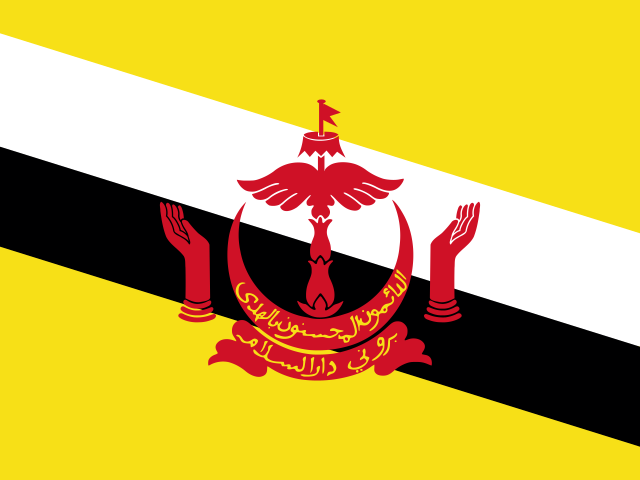
Brunei is an oil-and-gas monarchy on the island of Borneo with one of the most closed long-term entry regimes in the world. The grounds for working residence are the Employment Pass, rigidly tied to a specific employer and requiring the employer to hold a Foreign Workers Licence from the Department of Labour, the Professional Visit Pass for select categories of experts, the Dependant's Pass for family members, and the Student's Pass. For none of these categories does the immigration service's official website publish processing times. There is no separate permanent residence status with a published number of years: the closest analogue, the Entry Permit, is granted at the discretion of the Controller of Immigration without an objective criterion. Naturalisation is governed by the Brunei Nationality Act (Cap. 15): 20 years of residence in the country out of the preceding 25 years, an oral exam in Malay before the Language Board, and a decision made entirely at the Sultan's discretion; time spent in the country on temporary passes (including work passes) does not count toward this period unless the Sultan directs otherwise. Dual citizenship is not permitted. There is no personal income tax — the Income Tax Act taxes only the income of legal entities. The country's economy rests on the extraction and export of oil and natural gas. Since 2014 the Syariah Penal Code Order, 2013 has been phased in and is in force; under the code's direct provision (s. 3(1)) it applies to both Muslims and non-Muslims unless expressly stated otherwise, and it includes hudud and qisas categories of offences. The sale of alcohol is banned throughout the country (Excise Order, 2006, s. 73).
Other comparisons
Bangladesh or… Taiwan · South Korea · Japan · Thailand · Kazakhstan · Lebanon · Uzbekistan · Malaysia
Brunei or… Azerbaijan · Philippines · Kuwait · Iraq · Mongolia · Oman · People's Republic of China · Sri Lanka
More on each: Bangladesh · Brunei. Build your own comparison — up to four countries
This material is for reference and is not legal, tax or immigration advice. Visa rules, tax thresholds and prices change. Before deciding anything, check the official sources and consult a licensed professional in the relevant country.