Iraq or Jordan
Two countries side by side across the same rows as the full comparison. A dash means the value is missing: fields are not filled with guesses. about the data
| Iraq | Jordan | |
|---|---|---|
| Salary in IT | — | — |
| Citizenship | — | 4 years |
| Partner can work | — | — |
| Parents | — | — |
| Pets | no trouble | — |
| Pet limit | no limit | no limit |
| Quarantine | no | — |
| Residence permit fee | — | — |
| Rent, 2 bedrooms | $ 587 · estimate | $ 488 · estimate |
| Basket | $ 18,0 | $ 25,1 |
| Life expectancy | 72.42 | 77.98 |
| Homicides/100k | 9.46 | 0.84 |
| Natural hazards, 0–10 | 5.7 | 3.4 |
How the two sets of routes differ
Long-stay routes in this reference: Iraq — 29, Jordan — 10. Types present in both: work, study, family and investment. Iraq adds: talent.
Fees, thresholds and deadlines
Iraq: the fee is 100,000 IQD wherever it is published. Routes with a published decision deadline: 3; the shortest is 1 days. Jordan: fees range from 2 to 52 JOD. Routes with no fee: 1. Routes stating an income threshold: 2; the lowest is 10,000 JOD a month. Routes with a published decision deadline: 10; the shortest is 5 days.
Beyond the first permit
Permanent status: Jordan with no residence period; the other country publishes no term. Citizenship: Jordan after 4 years; the other country publishes no term.
Iraq in brief
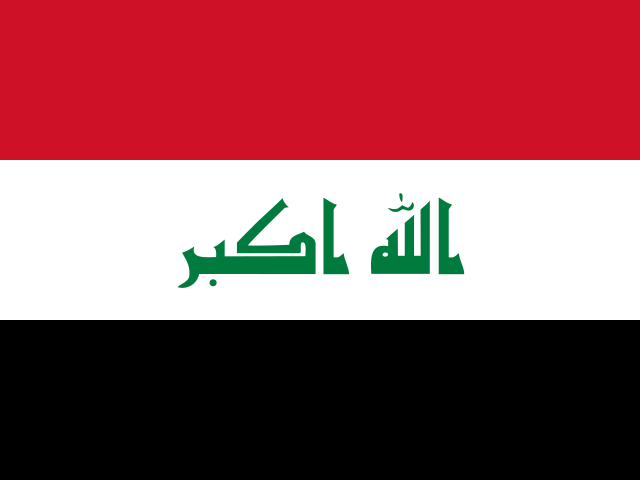
Iraq scores very low on governance and very high on water-related hazards. On the World Bank scale, which runs roughly from −2.5 to +2.5, political stability is −2.06 — eighth from the bottom among the 173 countries with data — rule of law is −1.36, control of corruption −1.21, and government effectiveness −1.10. Life expectancy is 72.42 years, health spending 333.29 dollars per person per year, basic water access reaches 98.41 percent of the population, and the mean PM2.5 concentration is 49.47 micrograms per cubic metre. Road deaths run at 21.5 per 100,000. Unemployment is 15.48 percent, and 32.01 percent among young people. Overall natural hazard is 5.7 out of 10 on INFORM: flooding 9.6, drought 7.5, earthquakes 5.1, coastal hazards 4.6, with no cyclone or tsunami exposure at all. The immigration framework is published as Law No. 76 of 2017 and was translated into English by the Ministry of Justice itself. One feature defines it: **there is no permanent status in the country**. An ordinary residence card is issued for no more than one year and renewed year by year as many times as the grounds persist; the maximum is a three-year renewable card, granted only on six enumerated grounds, among them 15 years of continuous residence, six years under a contract with the government, scientific and cultural service, study at a religious seminary, and business or investment. Marriage to a citizen leads to that same three-year card, not to a separate family status. There are eleven visa categories, each with precise periods, and two of them — visiting and tourist — expressly forbid working anywhere in the country, whether paid or unpaid. Duties fall on the receiving side too, on short clocks: an employer notifies the authority within 48 hours of hiring a worker and of that worker's departure, a hotel within two days of arrival and departure, and whoever brings a foreigner in to work must post financial guarantees or a return ticket. What is not in this data: the law sets no standard for deciding an application — it fixes only the appeal periods (15 days to object, 30 to answer) and counts the waiting time as legitimate residence. City populations are not given: no official source separating the city from the governorate could be found.
Jordan in brief
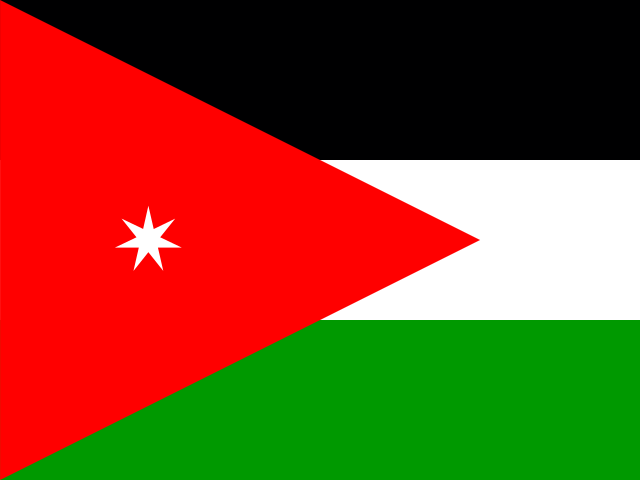
Jordan combines an ordinary labour-migration system — a work permit from the Ministry of Labour and an annually renewable, employer-tied residence permit — with a parallel investor track: buying real estate worth at least JOD 200,000 grants 5-year residency with no requirement for prior residence in the country, and since 2018 a separate citizenship-by-investment programme has been in force, with several routes ranging from a USD 1 million interest-bearing deposit to setting up a production project with a fixed number of jobs for citizens. Ordinary naturalisation by residence takes 4 years for most foreigners, but 15 years for citizens of other Arab countries with an Arab father — a case where the requirements for one group of foreigners are stricter than for another. Citizenship passes through the paternal line: a foreign wife of a citizen can naturalise after 5 years of marriage (3 years if she is a citizen of an Arab League country), whereas the foreign husband of a female citizen has no simplified route, and the children of a female citizen and a foreigner do not automatically receive citizenship. Dual citizenship has been permitted since 1987. The country is one of the most water-poor regions in the world: renewable internal freshwater resources per capita are about 61 m³ a year (2022) — an order of magnitude below the UN-recognised absolute-scarcity threshold of 500 m³. Homicides are rare (0.84 per 100,000), life expectancy is 78 years, but unemployment is high — 16.5% overall and almost 39% among youth. Aqaba, on the Red Sea, is administered separately from the rest of the country by its own Special Economic Zone Authority (ASEZA), with its own tax and customs rules.
Other comparisons
Iraq or… Taiwan · South Korea · Japan · Thailand · Kazakhstan · Lebanon · Uzbekistan · Malaysia
Jordan or… Azerbaijan · Philippines · Bangladesh · Kuwait · Mongolia · Oman · People's Republic of China · Sri Lanka
More on each: Iraq · Jordan. Build your own comparison — up to four countries
This material is for reference and is not legal, tax or immigration advice. Visa rules, tax thresholds and prices change. Before deciding anything, check the official sources and consult a licensed professional in the relevant country.