Botswana or Zimbabwe
Two countries side by side across the same rows as the full comparison. A dash means the value is missing: fields are not filled with guesses. about the data
| Botswana | Zimbabwe | |
|---|---|---|
| Salary in IT | — | — |
| Citizenship | 10 years | — |
| Partner can work | no | — |
| Parents | — | — |
| Pets | no trouble | difficult |
| Pet limit | no limit | no limit |
| Quarantine | no | no |
| Residence permit fee | — | — |
| Rent, 2 bedrooms | $ 347 · estimate | $ 521 · estimate |
| Basket | $ 21,0 | $ 29,7 |
| Life expectancy | 69.29 | 63.06 |
| Homicides/100k | 12.98 | 6.76 |
| Natural hazards, 0–10 | 2.2 | 3.9 |

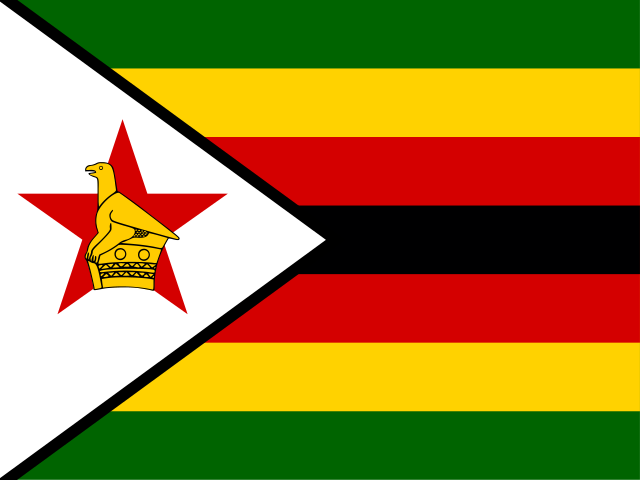
How the two sets of routes differ
Long-stay routes in this reference: Botswana — 14, Zimbabwe — 10. Types present in both: work, study, family and investment. The set of types is identical — the difference is in how many routes there are and on what terms, not in the types themselves.
Fees, thresholds and deadlines
Botswana: fees range from 1,500 to 3,000 BWP. Routes with a published decision deadline: 13; the shortest is 7 days. Zimbabwe: fees range from 100 to 1,000 USD.
Beyond the first permit
Permanent status: Botswana after 5 years; the other country publishes no term. Citizenship: Botswana after 10 years; the other country publishes no term.
Botswana in brief
Botswana regulates labour and permanent migration through the Department of Immigration and Citizenship (Ministry of Labour and Home Affairs): the official categories are the Work Permit (14 working days to process), the Residence Permit (30 working days), the Exemption Certificate, which exempts certain categories of foreigners from the Work Permit requirement (7 working days), and the Permanent Residence Permit, which requires a minimum of 5 years of continuous lawful residence — except for the investor category, to which this threshold does not apply; the official page gives the processing time both as "56 working days" and as "about six months". Ordinary naturalisation requires at least 10 years of residence in total and the last 12 months continuously before applying, and concludes with a mandatory renunciation of foreign citizenship; for spouses of Botswana citizens the threshold is reduced to 5 years of residence within the marriage. Dual citizenship is preserved without restriction only for those who acquired it by birth or by descent; those who acquire Botswana citizenship by registration, naturalisation or marriage must renounce their foreign citizenship, while citizens by birth/descent who simultaneously hold foreign citizenship must choose a single citizenship by age 21 or automatically lose Botswana citizenship. The import of dogs and cats is handled by the Department of Veterinary Services as an import permit: a valid rabies vaccination certificate and an inspection of the animal before the permit is issued are required — quarantine and rabies antibody titration are not among the listed requirements, and the permit is issued within 1 working day. The country's economy has historically relied on diamond mining and exports: in May 2026 diamonds accounted for 59.0% of all merchandise exports (Statistics Botswana). Access to basic water supply covers 91.77% of the population (World Bank, 2024), and the INFORM drought risk indicator is 5.4 out of 10 (2026). HIV prevalence among adults aged 15–49 is 15.7% (WHO, Global Health Observatory, 2024) — one of the highest rates in the world and a significant factor when planning health insurance and access to treatment.
Zimbabwe in brief
In Zimbabwe the chief hazard is not political but hydrological. Drought stands at 9.4 out of 10 on INFORM — the third-highest figure in this guide; overall natural hazard is nonetheless only 3.9, because there is no coastal, cyclone or tsunami exposure at all, flooding is 3.6 and earthquakes 1.8. Basic water access reaches 67.21 percent of the population, twenty-first from the bottom among the 171 countries with data. Health spending is 62.93 dollars per person per year — thirtieth from the bottom out of 167. Life expectancy is 63.06 years. The air is clean by this guide's standards: PM2.5 at 15.03 micrograms per cubic metre. Road deaths run high at 29.9 per 100,000. Inequality is among the most pronounced anywhere: a Gini coefficient of 50.3, the ninth-highest of 139 countries, though the figure is from 2019 and flagged as stale. Unemployment is 9.29 percent, and 15.55 percent among young people. On the World Bank scale, control of corruption is −1.25, rule of law −1.21, political stability −1.02 and government effectiveness −0.99. The internet is expensive: 65.97 dollars a month for a fixed connection running at 27.22. The immigration framework is published by two sources that complement each other. The Department of Immigration prints, for every permit, a full list of documents and the exact fee: 500 dollars for the employment and investor permits, 200 for the student permit, 100 for the scholar's, and for the spouse permit 300 to extend and 500 for the initial and the permanent stage, plus 300 for each dependant. The visa regime is split into three categories of country — no visa, a visa at the border, and a visa strictly in advance through the portal. The Immigration Act [Chapter 4:02] itself is published by the department on its own site. Two features shape the experience of a foreigner. First: a work permit is granted against an undertaking to train one's own replacement — the employer must advertise the vacancy in a local newspaper, attach the CVs of everyone on the shortlist, and name a local person who will understudy the foreigner. Second: settlement in the law is measured not by a permit but by domicile — ten years of continuous lawful residence, and only time held on a residence permit counts, not time on any other (s. 3(3)); domicile is lost after five years' absence. The Minister, meanwhile, is expressly forbidden to exempt a foreigner from the general requirements in a way that would let them live in the country permanently. What is not in this data: permanent residence exists and its fee is published (500 dollars, or 1,000 for an investor), but the department gives neither a qualifying period nor any conditions — the one permit for which no list is published, so the number of years is left empty here. There are no processing standards for any service: the law sets deadlines only for appeals, and very short ones — three working days to appeal from inside the country, ten from abroad, twenty-four hours to make representations to the Minister. City populations are not given: no official source separating the city from the province could be found.
Other comparisons
Botswana or… Nigeria · Rwanda · Tunisia · Algeria · Tanzania · Kenya · South Africa · Angola
Zimbabwe or… Gabon · Madagascar · Sierra Leone · Uganda · Zambia · Eswatini · Lesotho · Mozambique
More on each: Botswana · Zimbabwe. Build your own comparison — up to four countries
This material is for reference and is not legal, tax or immigration advice. Visa rules, tax thresholds and prices change. Before deciding anything, check the official sources and consult a licensed professional in the relevant country.