Bhutan or Kyrgyzstan
Two countries side by side across the same rows as the full comparison. A dash means the value is missing: fields are not filled with guesses. about the data
| Bhutan | Kyrgyzstan | |
|---|---|---|
| Salary in IT | — | — |
| Citizenship | 20 years | 5 years |
| Partner can work | no | — |
| Parents | no | — |
| Pets | difficult | no trouble |
| Pet limit | no limit | 2 |
| Quarantine | 20 days | no |
| Residence permit fee | — | — |
| Rent, 2 bedrooms | $ 196 · estimate | $ 674 · estimate |
| Basket | $ 16,2 | $ 19,5 |
| Life expectancy | 73.26 | 72.4 |
| Homicides/100k | 2.47 | 1.75 |
| Natural hazards, 0–10 | 2.8 | 3.9 |
How the two sets of routes differ
Long-stay routes in this reference: Bhutan — 13, Kyrgyzstan — 17. Types present in both: work, study, family and investment. Bhutan adds: talent. Kyrgyzstan adds: remote work and repatriation.
Fees, thresholds and deadlines
Bhutan: the fee is 40 USD wherever it is published. Routes with a published decision deadline: 8; the shortest is 5 days. Kyrgyzstan: every route that publishes a fee charges nothing. Routes with a published decision deadline: 15; the shortest is 7 days.
Beyond the first permit
Permanent status: Kyrgyzstan after 5 years; the other country publishes no term. Citizenship: Bhutan after 20 years, Kyrgyzstan after 5 years. Kyrgyzstan allows a second citizenship, Bhutan does not. Bringing your own parents: Kyrgyzstan — yes, Bhutan — no.
Bhutan in brief
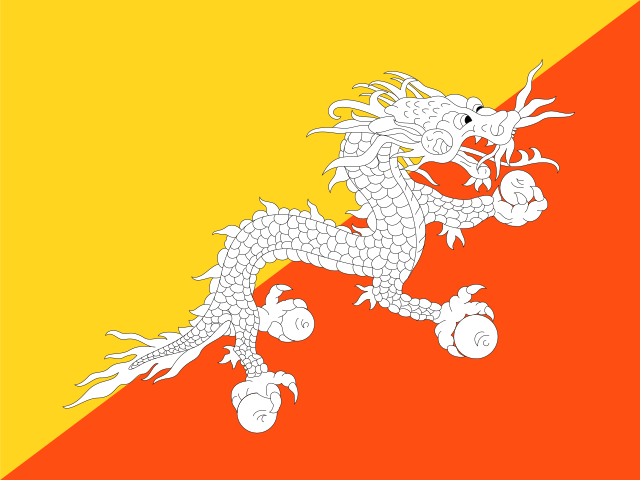
Bhutan is the most closed case for long-term relocation in this guide. Grounds for staying are limited to a narrow list: a tourist visa through a licensed tour operator with a mandatory daily Sustainable Development Fee (US$100 per day plus a one-off US$40 visa fee for most foreigners; a separate "entry permit"/visa-on-arrival arrangement with a reduced fee applies to citizens of India, Bangladesh and the Maldives), work permits tied rigidly to a specific employer and position (up to one year for skilled workers, up to three years for highly skilled workers), and student and business visas. There is no separate permanent resident status between a temporary permit and citizenship. Naturalisation is governed by the Bhutan Citizenship Act 1985: 15 years of residence for those with a Bhutanese parent or for civil servants, 20 years in all other cases, plus an exam in the Dzongkha language and knowledge of the country's culture; the government expressly retains the right to reject an application without giving reasons. Dual citizenship is not permitted — acquiring another citizenship automatically terminates Bhutanese citizenship. Marriage to a Bhutanese citizen gives the foreign spouse a residence status (Special Residence Permit or Immigration Card depending on the date of marriage) but does not speed up naturalisation. Land and real estate are reserved by the Land Act of Bhutan 2007 for citizens, the institution of the monarchy, the state and recognised Bhutanese organisations — foreigners, including spouses of Bhutanese citizens, are not on this list and may only rent housing. The country lies in a zone of high seismic hazard in the Himalayas.
Kyrgyzstan in brief
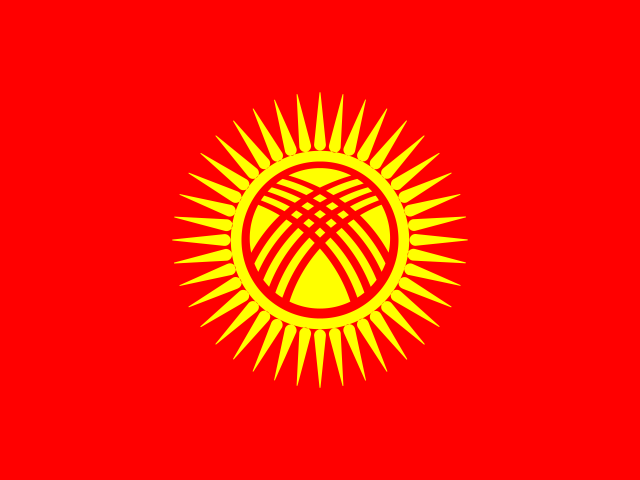
On the sum of its formal conditions, Kyrgyzstan is the most accessible way into Central Asia. Five years of lawful residence give permanent residence, five more open the way to citizenship, and the law's language requirement can be met in Russian: it holds official-language status, which is rare among post-Soviet states. Dual citizenship is allowed, but article 22 attaches three caveats: an international treaty is needed, it is not recognised for citizens of neighbouring states, and a holder of two passports may not be president, a member of parliament or a judge. Membership of the Eurasian Economic Union removes the work permit for citizens of the union and extends the union's pet import rules — up to two animals with no permit and no quarantine. Held back by control of corruption at −1.14, seismicity of 7.7 out of 10, winter smog in the Chuy valley, and skilled work concentrated almost entirely in Bishkek.
Other comparisons
Bhutan or… Taiwan · South Korea · Japan · Thailand · Kazakhstan · Lebanon · Uzbekistan · Malaysia
Kyrgyzstan or… Azerbaijan · Philippines · Bangladesh · Kuwait · Iraq · Mongolia · Oman · People's Republic of China
More on each: Bhutan · Kyrgyzstan. Build your own comparison — up to four countries
This material is for reference and is not legal, tax or immigration advice. Visa rules, tax thresholds and prices change. Before deciding anything, check the official sources and consult a licensed professional in the relevant country.