Angola or Tunisia
Two countries side by side across the same rows as the full comparison. A dash means the value is missing: fields are not filled with guesses. about the data
| Angola | Tunisia | |
|---|---|---|
| Salary in IT | — | — |
| Citizenship | — | — |
| Partner can work | — | — |
| Parents | — | — |
| Pets | — | no trouble |
| Pet limit | no limit | no limit |
| Quarantine | — | — |
| Residence permit fee | — | — |
| Rent, 2 bedrooms | $ 573 · estimate | $ 378 · estimate |
| Basket | $ 20,8 | $ 25,1 |
| Life expectancy | 64.81 | 76.71 |
| Homicides/100k | 4.1 | 4.69 |
| Natural hazards, 0–10 | 3 | 4.4 |
How the two sets of routes differ
Long-stay routes in this reference: Angola — 21, Tunisia — 33. Types present in both: work, study, family and investment. Tunisia adds: talent and retirement.
Fees, thresholds and deadlines
Angola: fees range from 30,500 to 76,250 AOA. Routes with a published decision deadline: 20; the shortest is 15 days. Tunisia: not a single route publishes its fee. Routes with a published decision deadline: 12; the shortest is 30 days.
Beyond the first permit
Permanent status: Angola after 10 years, Tunisia after 5 years.
Angola in brief
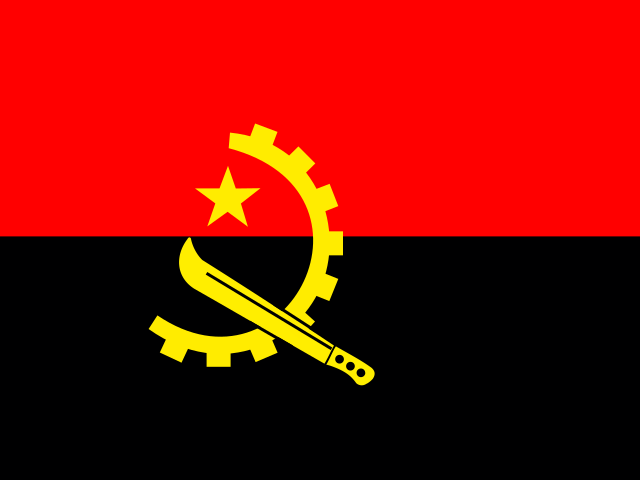
Angola is a country with an expensive capital and weak institutions: rule of law −1.17, control of corruption −0.62 and political stability −0.57 on the World Bank scale from −2.5 to +2.5, and a Gini index of 51.3 — among the highest in the world. Life expectancy is 64.81 years, basic water access reaches 68 per cent of the population, and unemployment stands at 14.1 per cent. What is markedly better than regional neighbours: 4.1 homicides per 100,000 (2016 data) and the air — PM2.5 at 19.91 micrograms per cubic metre. Natural risks are moderate (3.0 out of 10 on INFORM). The immigration framework was rewritten by law No. 13/19 and rests on a principle found almost nowhere else: a visa is not a step towards residence but a permission for a specific occupation. The tourist, study, medical, short-duration, border and — most importantly — work visas expressly forbid establishing residence. Only the residence-establishment visa and the temporary-stay visa for the family of a resident or the spouse of a citizen lead to a residence permit. The work visa additionally ties the holder to a single employer. Permanent residence is granted after ten years of temporary residence and has no expiry. The law's deadlines are firm in both directions: 30 days to decide a residence application, 15 working days for inter-agency opinions, and silence counts as consent.
Tunisia in brief
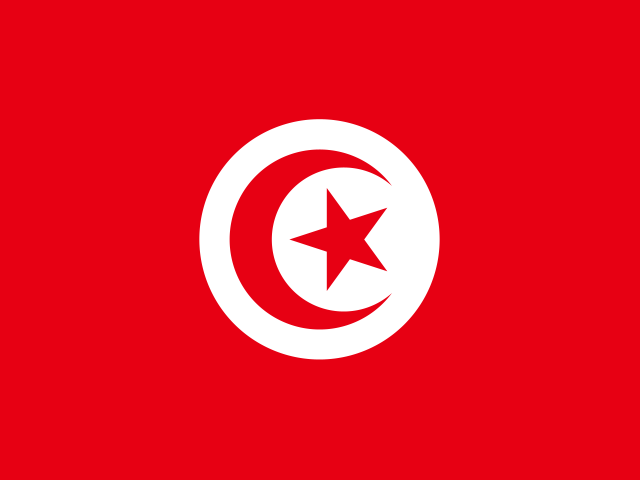
Tunisia is a North African republic on the Mediterranean coast with a relatively low cost of living and a small share of foreigners in its population: the 2024 census puts them at 0.55% (66,349 of 11,972,169 people, INS). The five cities described show different sides of the country: Tunis, the capital and business centre with a UNESCO-listed medina and the ruins of Carthage inside its metropolitan area; Sfax, the second-largest city and the industrial port of the south; Sousse, the resort centre of the Sahel whose medina and ribat were inscribed on the UNESCO World Heritage list in 1988; Hammamet, one of the country's oldest beach resorts on the Cap Bon peninsula; and Bizerte, a historic northern port beside the northernmost point of the African continent. Foreign workers face a branched system of work authorisations with several expressly described categories, including a simplified regime for companies covered by the 2016 investment law. Residence splits into temporary and ordinary: the temporary card is issued for no more than a year, while the ordinary one goes to a foreigner who has lived in the country for five uninterrupted years, to a foreign woman married to a Tunisian, to a foreigner with Tunisian children or one born in Tunisia, and it is valid for two years and renewable; Tunisian law knows no open-ended status. The right to ordinary residence is lost after an absence of more than six months without a return visa. The period to citizenship and the decision period for family applications remain unconfirmed: the nationality code could not be read in the primary source, and neither the law on the status of foreigners nor its implementing decree sets any decision periods. World Bank indices for political stability, control of corruption, rule of law and government effectiveness were all below zero in 2024 on the −2.5 to +2.5 scale, and youth unemployment exceeds 38%.
Other comparisons
Angola or… Nigeria · Rwanda · Algeria · Tanzania · Kenya · South Africa · Gabon · Madagascar
Tunisia or… Sierra Leone · Uganda · Zambia · Eswatini · Lesotho · Mozambique · Republic of the Congo · Burundi
More on each: Angola · Tunisia. Build your own comparison — up to four countries
This material is for reference and is not legal, tax or immigration advice. Visa rules, tax thresholds and prices change. Before deciding anything, check the official sources and consult a licensed professional in the relevant country.