Japan for Tourists from Russia: Visa, Cards, Seasons and Price Guides
Entry rules for Japan for Russian citizens: short-term visa up to 90 days, card usage and yen cash, best months to visit and typical price guides.
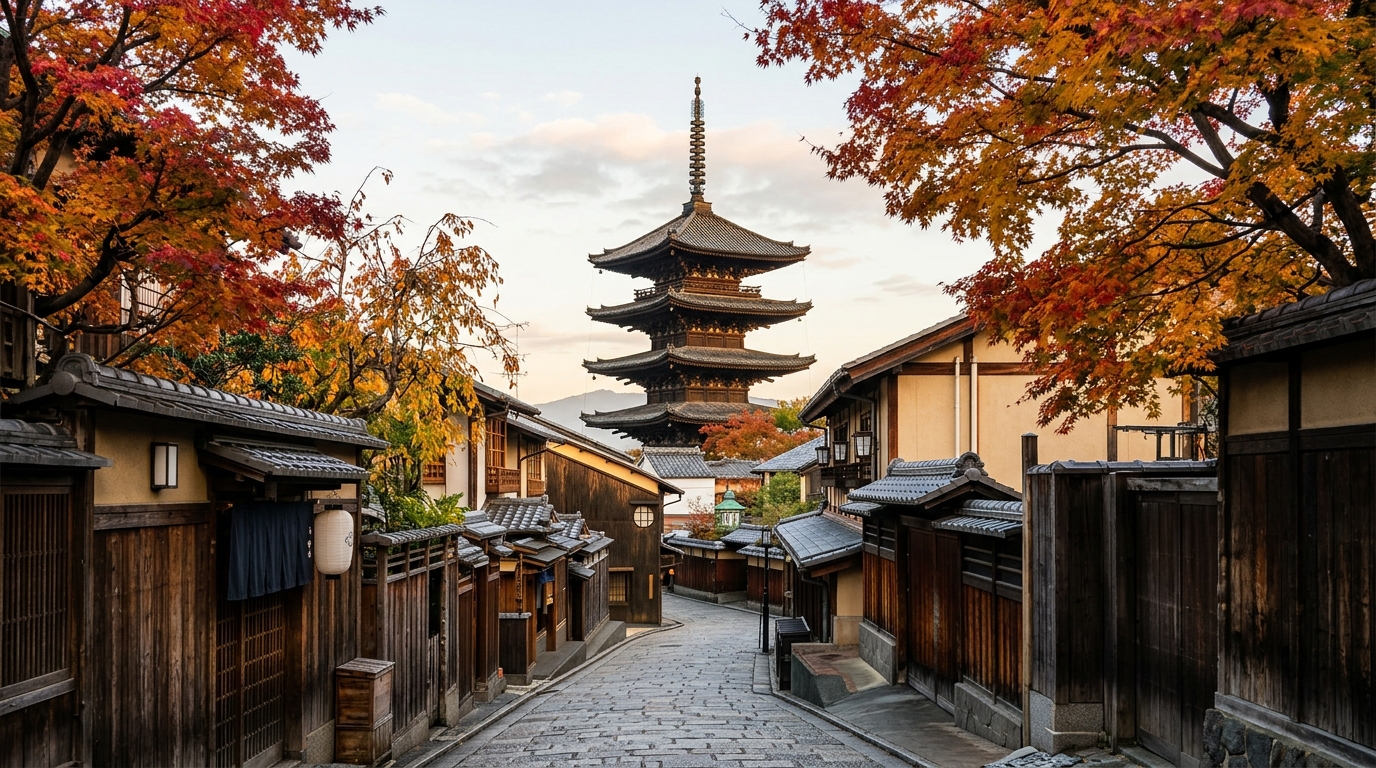
A summary of factual conditions for tourist travel to Japan with a Russian passport: visa requirements, card and cash payments, seasonal climate and basic expenses. The full tourist guide and country indicators are collected in the Japan entry section for Russian citizens and in the Japan country card.
Visa and Entry Rules for Japan for Russian Citizens
According to the Consular Department of the Russian MFA, Japan's Ministry of Foreign Affairs (MOFA) and the Embassy of Japan in Russia, Russian citizens are not on the list of countries eligible for visa-free entry. Any trip requires a visa obtained in advance from a Japanese consular office in Russia. Visa-free travel between Russia and Japan has never existed (before the pandemic, a 2017 agreement simplified visa procedures, allowing multiple-entry visas up to 5 years with electronic submission).
| Parameter | Current rule |
|---|---|
| Short-term visa type | Tourist, business or private (no work permitted) |
| Length of stay | Up to 90 days |
| Processing time | Usually 5–10 days if approved |
| Passport | Valid for the duration of the trip (no formal minimum validity buffer set by the Japanese side) |
| Visa documents | Completed application form, photo, itinerary, proof of purpose of travel (tour package, invitation or business letter) |
| Transit | Up to 3 days — transit visa (recommended in advance); visa-free transit is possible, but border authorities may require departure on the next available flight |
Work on short-term visas is prohibited. The final decision on entry is made by an immigration officer at the border regardless of visa status.
Bank Cards, Yen and Cash Payments
Japan's national currency is the Japanese yen (JPY). Banknotes in circulation are 1,000, 2,000, 5,000 and 10,000 yen (design updated in 2024) and coins of 1, 5, 10, 50, 100, 500 and 1,000 yen. In 2024, cashless payments accounted for more than 42.8% of all transactions, yet cash remains widely used.
| Payment method | Status in Japan |
|---|---|
| Mir cards | Do not work |
| Visa and Mastercard cards from Russian banks | Do not function |
| UnionPay of Gazprombank and Rosselkhozbank | Not accepted since November 2024 (after sanctions expansion) |
| UnionPay of the Asia-Pacific Bank (ATB, 2026 data) | Accepted at FamilyMart, Lawson, 7-Eleven, Uniqlo, Zara and most ATMs for cash withdrawal |
| Foreign Visa and Mastercard cards | Accepted without restrictions, with maximum coverage (including small shops and regions) |
| Foreign American Express cards | Accepted at major chains and hotels; less often at small independent establishments |
- Why a foreign Visa or Mastercard is needed. Such cards are required wherever payment goes through international payment systems: for deposits and guarantees at international hotels, online bookings, shinkansen tickets and car rentals.
- Contactless payments and IC cards. Bank cards and the Suica and Pasmo transit cards are widely accepted in major cities — at chain restaurants, convenience stores, department stores, hotels and ticket machines.
- Where cash is necessary. Yen is needed at small family restaurants and izakayas, temples and shrines (amulets, goshuin, offerings), rural areas, public sento baths, local markets, street vendors and older coin-operated lockers. Outside Tokyo, Osaka and Kyoto (Hakone, Nara, Kanazawa), more cash is required.
- ATMs and currency exchange. Foreign cards are reliably served by 7-Eleven (Seven Bank) and Japan Post Bank ATMs. When buying yen in Russian banks, availability at counters is limited; a common option is to bring US dollars and exchange them locally.
Climate, Seasons and Natural Risks
Japan's climate ranges from subtropical in the south to temperate monsoon in the central part and subarctic in the north (Hokkaido).
- Best months to visit: March, April, May, October and November.
- Sea (beach) season: June, July, August and September.
- Heat and rainfall: in July–August, major cities including Tokyo experience high temperatures and humidity; from late summer to early autumn (mainly July–September), typhoons, heavy rains and flooding are possible. Hokkaido (Sapporo) has mild summers and extremely snowy winters — averaging about 4.79 m of snow per year.
Average monthly temperatures and precipitation for central Japan (Tokyo) coordinates, based on Open-Meteo Archive data for 2015–2024:
| Month | Average temperature, °C | Precipitation, mm |
|---|---|---|
| January | -2.1 | 64.4 |
| February | -1.4 | 67.9 |
| March | +3.1 | 107.8 |
| April | +8.5 | 133.5 |
| May | +13.8 | 146.0 |
| June | +17.1 | 188.1 |
| July | +21.3 | 218.3 |
| August | +22.1 | 171.7 |
| September | +18.2 | 184.5 |
| October | +11.7 | 177.6 |
| November | +6.3 | 74.3 |
| December | +0.4 | 53.4 |
Japan lies on the boundaries of tectonic plates of the Pacific Ring of Fire: the country has 108 active volcanoes (~10% of all active volcanoes in the world), earthquakes occur regularly, and coastal areas are exposed to tsunami risk. At the same time, strict building codes and a well-developed early warning system are in place.
Price Guides for Tourists
According to Livingcost data for 2026 (given in USD, without exchange rate conversion), basic transport and everyday expenses in Japan are:
| Expense category | National average | Range across major cities |
|---|---|---|
| Single transit ride | 1.59 USD | Tokyo — 1.30 USD, Yokohama — 1.36 USD, Osaka — 1.48 USD, Nagoya — 1.51 USD, Sapporo — 1.56 USD |
| Monthly transit pass | 59.91 USD | From 32.25 USD (Osaka) and 46.64 USD (Sapporo) to 58.54 USD (Yokohama), 62.27 USD (Nagoya) and 76.07 USD (Tokyo) |
| Gasoline (1 liter) | 1.05 USD | — |
| Cold medicine (for a week) | 9.68 USD | — |
A set of 9 basic grocery items per livingcost.org costs 34.92 USD in total: 500 g of bread (1.40 USD), 1 liter of milk (1.40 USD), 12 eggs (2.01 USD), 1 kg of rice (4.22 USD), 1 kg of chicken fillet (6.17 USD), 1 kg of cheese (11.30 USD), 1 kg of potatoes (2.55 USD), 1 kg of apples (4.53 USD) and 2 liters of soda (1.34 USD).
Practical Facts: Safety, Connectivity and Pet Import Rules
- Crime situation. Japan is among the countries with extremely low levels of violent crime and theft (high nighttime safety); the homicide rate per UNODC data for 2024 is 0.229 per 100,000 people per year.
- Connectivity and water. Access to basic safe water supply is 99.18% (World Bank, 2024). Average mobile internet speed is 67.85 Mbps, fixed — 224.79 Mbps (Ookla, 2026).
- Traveling with pets. Animal import is regulated by the Animal Quarantine Service (
maff.go.jp/aqs): rabies antibody titration at an accredited laboratory and advance notification are required, and preparation takes at least 6 months. If all conditions are met, quarantine on arrival lasts about 12 hours; if deadlines are missed, up to 180 days.
Detailed climate charts, city indicators and comparisons of Japan with other destinations in Asia and worldwide are available in the Japan country card and in the country comparison tool.
Countries mentioned in the guide
Primary sources
Telegram channel
New guides on travel, entry rules, bank cards, and residency — concise and backed by primary sources.
Subscribe: @relomap_onlineThis material is for informational purposes only and is not legal advice. Verify entry and residency terms on official agency websites.